
Advisory Firms and Negative Reviews
A negative review is not a testimonial, so the SEC's testimonial rules do not resolve the question a firm actually faces when one shows up.
Krystal Gonzalez3 min read
Insights & Research
Structured writing on revenue infrastructure, reputation equity, and the operational systems modern service businesses run on.
A negative review is not a testimonial, so the SEC's testimonial rules do not resolve the question a firm actually faces when one shows up.

A new patient inquiry is not a quiet moment to get to later. It is a short window before that patient books a consultation somewhere else.

The review is already public. What a salon says next, in front of every other client reading it, is the part still inside its control.

The estimate request did not go to one company. It went to three or four, and whichever one calls back first usually gets the walkthrough.
An AI assistant does not know a firm handles a case type unless a page says so in the words a client actually used to ask.
Financial advisors spent years avoiding testimonials entirely because the old rule banned them outright. The rule changed, but allowed and anything goes are not the same thing.
When a prospective patient asks an AI assistant what a treatment involves or costs, the assistant answers from whatever the practice's website actually says, or it answers from a competitor's page instead.
A single negative review does not sink a home service business. How the business responds to it, in public, in front of every future customer who reads it, does more to shape trust than the review itself.

Most after-hours calls to a law firm are routine. A few are not, and how an AI answering system handles that difference matters more than how it handles the easy calls.

A salon or spa website can look polished and still lose bookings at the exact moment a visitor is ready to schedule. Here is what the page actually needs to do.
A prospect fills out a contact form, and a 30-minute call goes on the calendar before anyone knows what they actually need or whether they are ready to move.
During the busiest stretch of the season, the counter is handling walk-ins, loading trucks, and the phone at the same time. Some of those calls are never going to get picked up live.
Only asking clients who seemed satisfied to leave a review, while quietly steering unhappy ones away, feels like reasonable reputation management. Google calls it review gating, and it is against the rules.
A new client messages a salon through Instagram, the website, or a missed call, asking about an opening this week. Whoever answers first usually gets the appointment.

A prospective patient lands on a practice's website already comparing it to two or three others open in nearby tabs. What the page does in the next thirty seconds decides whether a consultation gets requested or the tab just closes.
A homeowner with a broken water heater on a Saturday is not reading your story. They are trying to find out if you can come today.
A quote for a two-week rental goes out, then nothing. That silence gets read as a no more often than it should be.

The moment someone decides to ask about a treatment rarely lines up with business hours. What happens between that decision and the next morning determines whether the practice ever hears from them.

Somebody comparing law firms after a car accident is not filing one form. They are filing three or four, and whichever firm replies first usually gets the call back.

A referral already carries trust. What rarely comes with it is a plan for what happens after the introduction is made.
By the time a prospective client dials the number, they have usually already decided whether your firm made the shortlist. The website did that work.
A photo of the equipment answers a question nobody was asking. The customer wants to know if it is available Friday and what it costs.
A referral can survive a slow reply. A cold inquiry from your website usually cannot. Most firms are still treating them the same way.
A four point nine average with twelve reviews looks great to a patient. To Google's ranking system, it barely registers next to a competitor with two hundred.
The pay-per-lead model looks safer than regular pay-per-click. It only stays that way if someone actually answers the lead once it arrives.
Someone asks an AI assistant which rental yard has a lift available this weekend. The answer favors whichever business can prove the equipment is actually there.
A pipe bursts at nine at night and the caller starts working down a list of contractors. Whoever picks up first, in whatever form, usually gets the job.
Someone asks an AI assistant to recommend a lash studio or day spa nearby. The answer is not the prettiest photo feed. It is whichever business the assistant can verify the fastest.
A prospective client is comparing three law firms before ever picking up the phone. The one with a thin, stale review page loses that comparison before the call happens.
A homeowner asks an AI assistant which plumber or electrician to call nearby. The answer is not based on the flashiest website. It is based on what the company can actually prove, right now.
A rental company can win the click and still lose the job, if whoever answers the phone can't confirm availability fast enough to keep the customer from calling the next yard.
Someone asking an AI assistant to recommend a lawyer is not typing a search term. They are asking a question, and the assistant answers with whichever firm it can actually verify.
Most prospective clients find an advisory firm through a referral, then quietly check the website before ever picking up the phone. That visit either confirms the referral or undoes it.
A homeowner who requested a quote and went quiet has not always chosen someone else. Often they are still deciding, and whoever follows up next wins the job.
Clients do not stop wanting to book, reschedule, or ask a quick question just because the salon closed for the night. The businesses that answer anyway are the ones that keep the appointment.
By the time a prospective client actually calls a financial advisor, they have already done weeks of research. Missing that call wastes more than a message would suggest.
A homeowner searches for a plumber and Google shows three options before anything else. Getting into that box has a lot to do with reviews, and not just how many.
A new client from a paid ad costs real money to acquire. Whether that money was well spent depends on something that has nothing to do with the ad.
Someone asks an AI assistant to recommend a med spa nearby. The answer it gives is not based on the prettiest homepage. It is based on what the practice can actually prove.
A prospective client calls three firms before lunch. The one that picks up gets the case. Here is what that means for how a firm handles the calls it cannot staff.
A regular who used to come every six weeks has not called in four months. Nothing happened that anyone noticed. That is exactly the problem.
Someone needs a piece of equipment for Saturday morning and it is already Friday night. They will rent from whoever picks up, not whoever has the better fleet.
She came in, asked good questions, seemed genuinely interested, and left without booking. Most practices never contact her again. That is the leak.
Renting a piece of equipment feels transactional, but the decision of who to rent it from is not. People are checking reviews before they call.
Referrals close at a rate paid ads rarely touch. That is not an argument against paid ads. It is an argument for being honest about what each one is actually for.
A restaurant can be a genuine local landmark and still be invisible to a hungry stranger's phone. Here is how Cellara Growth Co built City Cafe's website to answer that stranger, and the AI assistant they asked, correctly.
A brand-new venue has no reviews, no history, and no second chance to look credible. Here is how Cellara Growth Co built The 5Eleven Venue's website, blog, and booking system to carry that weight from day one.
Two practices can run the exact same ad campaign and end up with wildly different costs per patient. The gap is almost never the ads. It is what happens after the click.
Some of your next prospects are not googling your name. They are asking an AI assistant who they should call, and the assistant is answering with or without you.
A salon with thirty recent reviews can outrank one with a hundred old ones. The number people chase is usually the wrong number to be chasing.
A single click on a legal ad can cost more than a full tank of gas. That is not automatically a bad deal. It depends entirely on what happens after someone clicks.
Referrals get a prospect to look you up. What they find when they do is what gets them to actually call. Most advisory firms have never built that part on purpose.
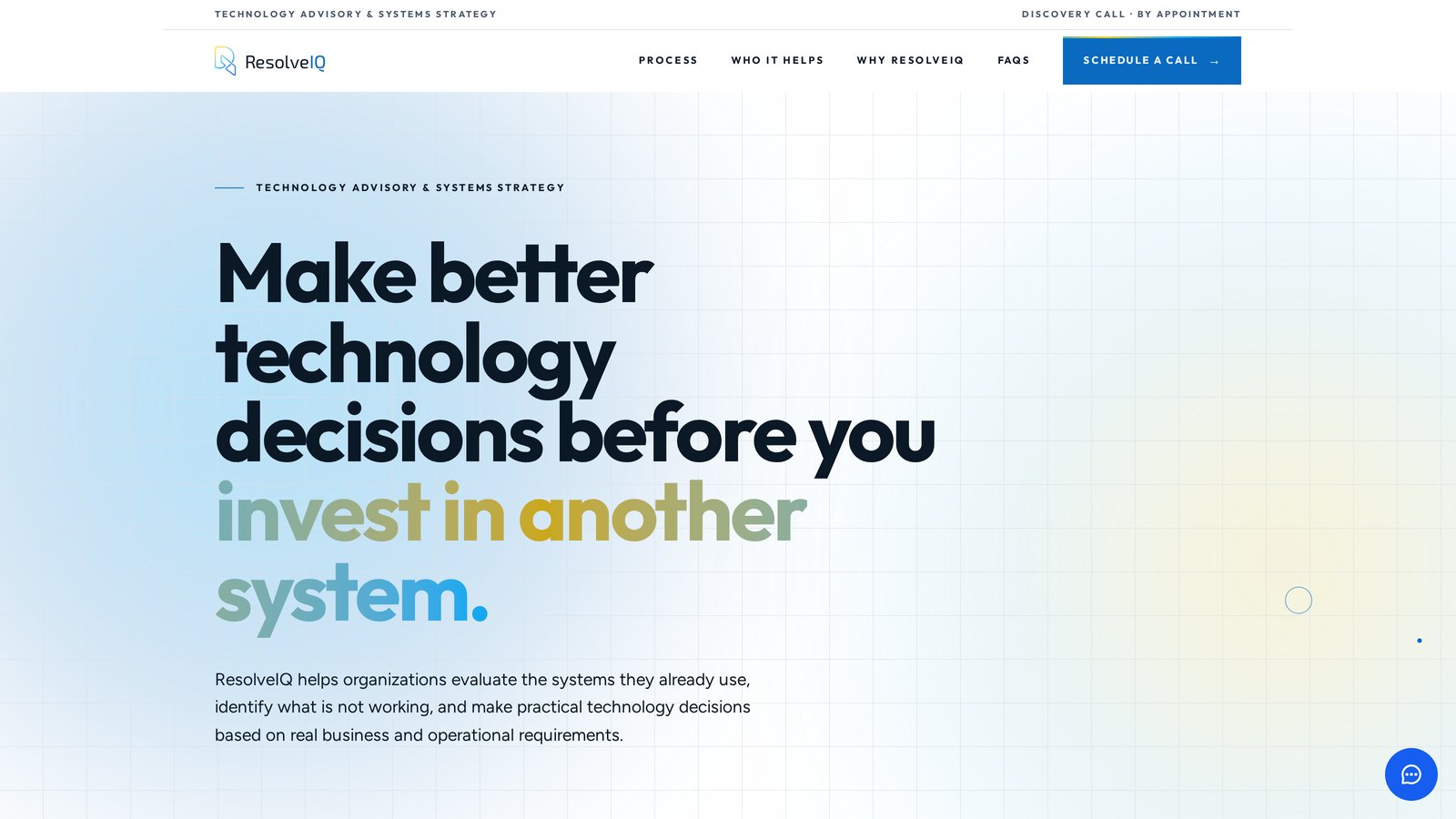
Most contractors do not have a software problem. They have an unresolved business problem that software was asked to cover. ResolveIQ built its advisory practice around that distinction, and Cellara built the presence that explains it.
Trace where service-business revenue leaks between inquiry and close, then fix slow response, cold follow-up, and disconnected tools step by step.
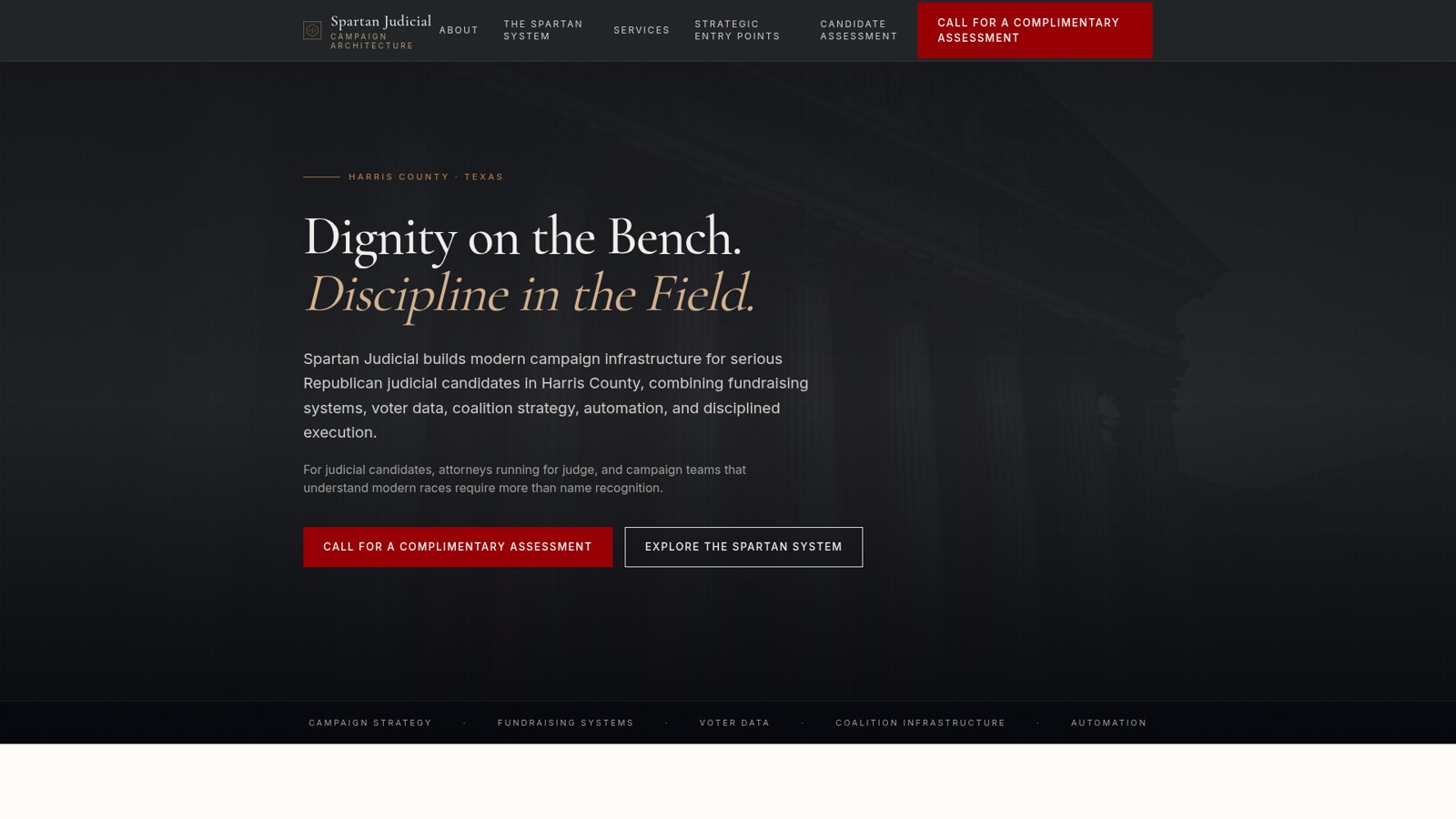
Spartan Judicial needed a public presence and an operating system that could hold confidential candidate inquiries, route them correctly, and follow up without manual work. Here is what Cellara built and how the system runs.
An audit of seven fixable revenue leaks in service businesses, from slow lead response to disconnected back-office systems, and how to close each one without hiring.

MC Eye Center had the experience, services and patient relationships behind the business. What it did not have was a digital presence that adequately communicated them. Here is how the new experience was rebuilt around how patients actually search, evaluate and choose an eye care provider.
For most service businesses, the listing does the ranking and the website does nothing. That is a structure problem, not a luck problem, and it is fixable in a week.
Call your own line after hours, fill out your own form, send a cold text, then watch the clock. It is the most honest review your business will ever get.
Anvil Rentals built a business on referrals. As it grew, it needed a way to show up for prospects who had never heard the name on a jobsite. Here is what Cellara built, and why it can actually be found.
A lot of websites look finished and are still invisible to ChatGPT, Perplexity, and AI search. Here is a ten-second test any business owner can run to find out if theirs is one of them.
When your team is on a roof or under a house, the phone still has to get answered. Here is the journey that keeps jobs from slipping away while your crew is in the field.
Every rental inquiry starts with the same four questions. Here is how the website should answer them before the phone even rings.
The firm that responds first and explains itself most clearly usually wins the retention, not the firm with the most experience. Here is how to build intake that reflects that.
Getting a first booking is only half the job. Here is how the website should carry a client from first visit through rebooking.
A good-looking website is the minimum, not the achievement. Here is the operational checklist that actually moves patients from search result to booked appointment.
A strategy call is the fastest way to see where your business is losing revenue today.